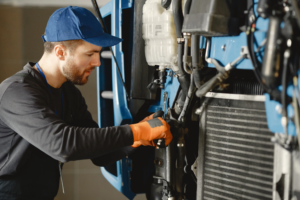
From manufacturing machinery and refrigeration systems to computers and HVAC equipment, businesses rely on essential equipment to keep operations running smoothly. But what happens when that equipment unexpectedly breaks down?
An equipment failure can lead to more than just costly repairs. It can interrupt operations, damage inventory, delay services and result in lost revenue.
Equipment breakdown insurance helps businesses manage the financial impact of unexpected mechanical, electrical and equipment failures, providing an important layer of protection beyond traditional commercial property insurance.
What Does Equipment Breakdown Insurance Cover?
Equipment breakdown insurance is designed to help businesses recover from sudden and accidental equipment failures. Depending on the policy, coverage may include:
- Equipment repair or replacement: Costs associated with repairing or replacing covered machinery and equipment following a breakdown.
- Business income loss: Lost income when a covered equipment failure forces a business to temporarily suspend or reduce operations.
- Spoilage and property damage: Losses involving inventory or other property damaged as a result of a covered equipment breakdown.
- Extra expenses: Additional costs incurred to minimize business interruptions and maintain operations during repairs.
For example, consider a grocery store that experiences a refrigeration system failure due to a mechanical malfunction. Equipment breakdown insurance may help cover the cost of repairing the system and replacing spoiled inventory. If the failure also forces the store to temporarily close, business income coverage may help offset the resulting financial losses.
Equipment Breakdown vs. Commercial Property Insurance: What’s the Difference?
While commercial property insurance and equipment breakdown insurance both provide valuable protection, they address different types of risks.
Commercial property insurance generally covers physical damage caused by covered events such as fire, windstorms, theft and vandalism. However, standard property policies typically exclude internal mechanical and electrical breakdowns.
Equipment breakdown insurance helps fill this gap by covering certain sudden and accidental equipment failures that may not be covered under a traditional property policy.
Consider these scenarios involving a commercial refrigeration unit:
- Fire damage: A fire damages the refrigeration unit. The loss may be covered under commercial property insurance.
- Flood damage: Floodwater damages the unit. Standard commercial property and equipment breakdown policies generally exclude flood damage, making separate flood insurance important.
- Electrical failure: A power surge damages the unit’s compressor. Equipment breakdown insurance may cover the resulting damage, subject to policy terms.
Although the same equipment is damaged in each scenario, the cause of the loss determines which coverage may apply.
Understanding how different policies work together is an important part of building a well-rounded business insurance program.
What Types of Equipment Can Be Covered?
Equipment breakdown insurance isn’t just for manufacturers or businesses operating heavy machinery. Many organizations rely on equipment that could cause significant disruptions if it suddenly stopped working.
Depending on the policy, covered equipment may include:
- Mechanical equipment: Motors, pumps, generators, production machinery, ovens and other mechanical systems.
- Electrical systems: Transformers, electrical panels, wiring and other electrical equipment.
- Technology and communication systems: Computers, servers, telecommunications equipment and certain electronic systems.
- Heating, ventilation and air conditioning (HVAC): Heating and cooling systems essential to maintaining comfortable and functional business environments.
- Refrigeration equipment: Commercial refrigerators, freezers and temperature-control systems used to protect perishable inventory.
- Boilers and pressure equipment: Boilers, pressure vessels and related systems.
Coverage may also extend to certain types of operator error that result in a covered equipment breakdown.
Even businesses without specialized machinery may depend heavily on electrical, heating, cooling or technology systems. Identifying which equipment is essential to daily operations can help determine whether additional coverage is needed.
What’s Typically Not Covered?
While equipment breakdown insurance provides valuable protection, it is not intended to cover every equipment-related issue.
Common exclusions may include:
- Normal wear and tear: Gradual deterioration resulting from regular equipment use.
- Lack of maintenance: Damage caused by neglecting routine inspections, servicing or necessary repairs.
- Rust, corrosion and deterioration: Damage developing gradually over time.
- Mold or pest-related damage: Losses caused by mold, insects, rodents or similar conditions.
- Certain external events: Damage caused by events such as flooding or other excluded causes of loss.
For example, if an HVAC system fails because routine maintenance was neglected, the resulting damage may not qualify for coverage.
Maintaining equipment according to manufacturer recommendations and keeping accurate service records can help businesses reduce the likelihood of breakdowns and support the claims process when a covered loss occurs.
Key Considerations When Selecting Coverage
Every business has different equipment needs and operational risks. When evaluating equipment breakdown insurance, it’s important to consider how a failure could affect both your property and your ability to continue serving customers.
1. Replacement Cost vs. Actual Cash Value
Policies may offer different approaches to determining the value of damaged equipment:
- Actual cash value: Reflects the equipment’s value at the time of the loss, accounting for depreciation.
- Replacement cost: Generally provides for replacing covered equipment with comparable equipment without deducting depreciation, subject to policy conditions.
Understanding how your equipment would be valued following a loss can help you make informed coverage decisions.
2. Business Income and Extra Expense Coverage
The cost of repairing equipment may be only one part of the financial impact.
If a critical system fails, your business could experience lost sales, delayed production or temporary closure. Business income and extra expense coverage may help address these losses when they result from a covered breakdown.
Reviewing applicable limits, waiting periods and coverage conditions is particularly important for businesses that rely on specialized equipment or continuous operations.
3. Leased Equipment and Rented Facilities
Businesses often depend on equipment they don’t own, including leased machinery or systems maintained by a building owner.
If that equipment fails, it could still disrupt your operations, even if another party is responsible for the repairs.
Reviewing lease agreements and insurance provisions can help clarify responsibilities and identify potential coverage gaps. Coverage for equipment owned by others or resulting business income losses depends on the policy’s specific terms.
4. Equipment Used Off-Site
If your business transports equipment between locations or uses machinery away from its primary premises, confirm whether your policy extends to those exposures.
Additional coverage may be necessary for equipment used or stored off-site.
5. Equipment Upgrades and Efficiency Improvements
Some equipment breakdown policies offer coverage enhancements that help businesses replace damaged equipment with newer, more efficient or environmentally friendly alternatives.
These options may be particularly valuable when replacing older equipment that no longer meets current efficiency or safety standards.
Taking a Proactive Approach to Equipment-Related Risks
Equipment breakdown insurance is one component of a broader risk management strategy. Businesses can also take practical steps to reduce equipment failures and limit potential disruptions.
Consider regularly reviewing maintenance schedules, documenting inspections, identifying critical equipment and developing contingency plans for unexpected outages.
It’s also important to reassess your insurance coverage as your business grows, adds equipment or changes operations.
At Bender Insurance Solutions, we believe protecting your business starts with understanding the risks that could interrupt your operations. Our team works with businesses to evaluate their equipment-related exposures, review existing coverage and identify insurance solutions aligned with their operational needs.
Whether your business relies on specialized machinery, refrigeration systems or everyday technology, having the right coverage in place can help you prepare for unexpected disruptions and support long-term business continuity.
Contact Bender Insurance Solutions to discuss your equipment breakdown exposures and explore coverage options for your business.
This article is intended for informational purposes only and should not be interpreted as insurance, legal, or risk management advice.